
Joiri Minaya: Fleurs de liberation: an ecology of resistance
Prospect.6 the future is present, the harbinger is home
New Orleans African American Museum, New Orleans, LA
November 2, 2024 – February 2, 2025
Production | Exhibition Grant
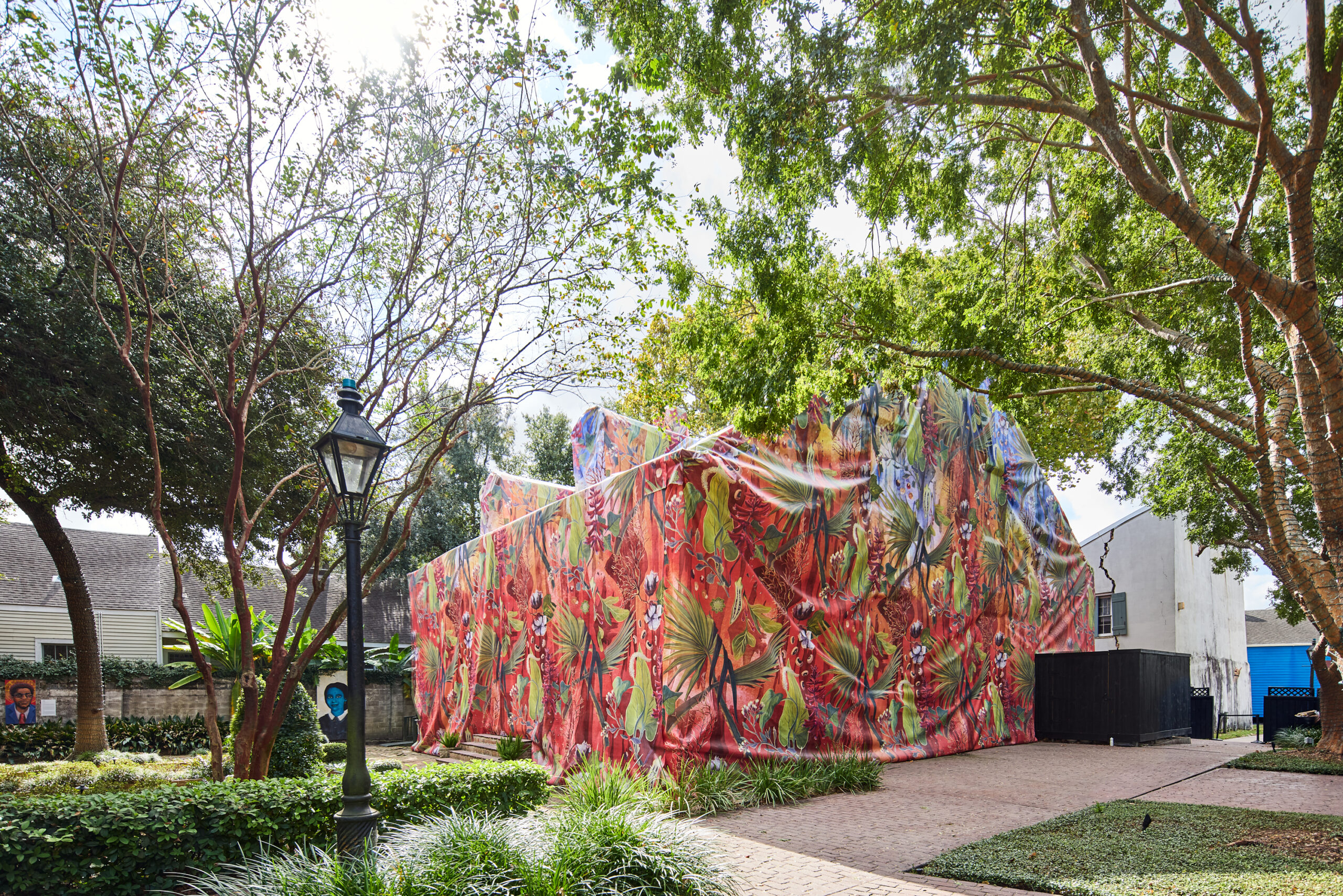
For her contribution to Prospect.6, the future is present, the harbinger is home, Joiri Minaya presents Fleurs de liberation: an ecology of resistance. Building upon her Cloaking series, Minaya will wrap the New Orleans African American Museum (NOAAM) in a vibrant custom-designed fabric that incorporates hand-rendered motifs featuring local plant life with historic and cultural significance. Using the visual language of what is often coded as “tropical” as her critical medium, Minaya connects the commodification of this flora to the legacy of colonization, evidencing how deceptively innocuous mass-produced prints flatten Caribbean identities and erase specific histories of colonialism. For her Cloaking works, Minaya creates original tropical prints with allegorical designs symbolizing untold narratives of colonization and oppressor-oppressed dichotomies. Through “plants of resistance”–Manchineel Trees, Castor Plants, Yaupon Holly, Coontie Palms, and Rompe Saraguey–Minaya highlights plants used in ethnomedicine and purging rituals, or traditions of despojo, practiced by Native and Afro-diasporic peoples in the Americas. The designs highlight plants used as weapons of defense, means of protection, and a source of resistance. Minaya is particularly interested in highlighting how local plants were used to resist passive assimilation into colonialist relationships by providing healing, sustenance, and liberation.
With this work, Minaya will bring attention to the narratives of resistance that can be told through flora and fauna of the Tremé neighborhood. Situated on land that was formerly occupied by the Morand Plantation, the area became home to the nation’s largest and politically progressive community of black people by the mid-1850s. At NOAAM, Minaya’s “cloaking” of the museum building on their main campus proposes a new yet temporary monument for these stories. By recovering the exploitative history of Tremé’s agricultural past, Minaya will critically explore the legacies of the neighborhood’s historical transition from plantation to a prosperous community of color within the local and global context of its contemporary black community.
Prospect’s mission is to present artwork by local, national, and international artists in both traditional and highly unexpected environments with an emphasis on collaborative partnerships and site-specificity. Prospect invites residents and visitors to celebrate art and artists as intrinsic to the local landscape and to experience New Orleans as they never have before. For Prospect.6, Co-Artistic Directors Miranda Lash and Ebony G. Patterson will posit New Orleans as a globally relevant point of departure for examining our collective future as it relates to climate change, legacies of colonialism, and definitions of belonging and home.
To learn more, visit Prospect New Orleans.
Joiri Minaya, Fleurs de liberation: an ecology of resistance (2024), New Orleans African American Museum (NOAAM)